Red-listed Spotted Flycatcher recorded on Eton land
A rare September sighting of two Spotted Flycatchers has been welcomed by campaigners fighting Eton’s plans to build a huge new 3,000-house new town at East Chiltington.
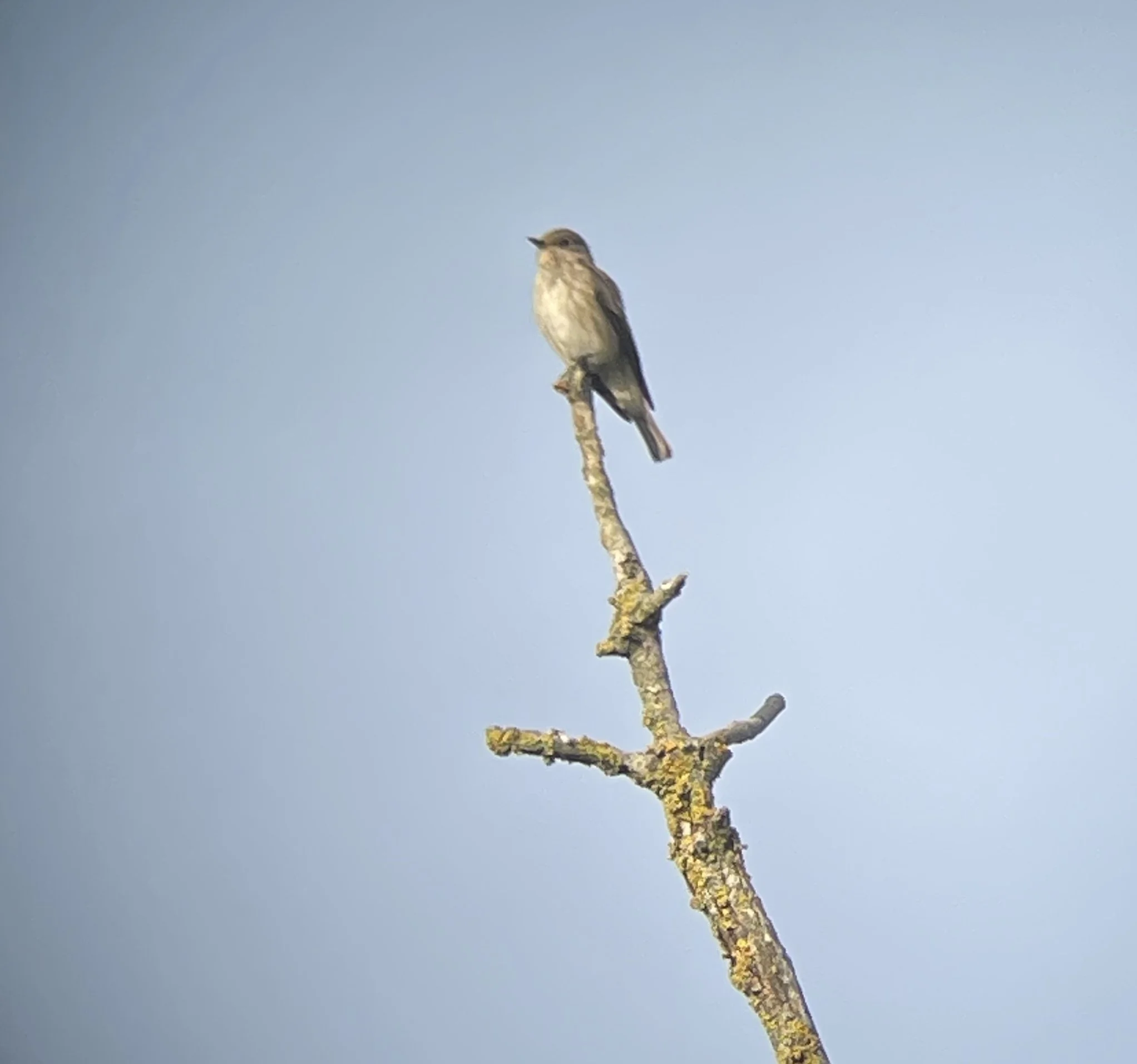
Keen birder Dan Bodsworth has never seen Spotted Flycatchers in the area so he was absolutely thrilled to spot the pair as he walked across the Eton site at North Barnes Farm last Thursday (September 24).
The Spotted Flycatcher is a summer migrant to the UK but, following a devastating 92% decline in the UK breeding population since 1967, it is now UK Red-listed as a Bird of Conservation Concern. It’s also designated a Species of Principal Importance for the conservation of biodiversity in England and was one of 59 birds designated as priority species under the UK Biodiversity Action Plan.
Dan, whose family have lived in Plumpton since the 1960s, said: “I really had mixed feeling about seeing the Flycatchers to be honest. It was bitter-sweet because, although I always feel joy seeing these birds, especially a bird this scarce, it’s devastating to know that possibly - in just a few years’ time – their habitat, where they are feeding, might be concreted over.”
Over half of the species listed as priority birds in the UK Biodiversity Action Plan have been recorded in Plumpton and East Chiltington*. As well as the Spotted Flycatcher, the list includes Turtle Doves, Nightjars, Corncrakes, Lesser Spotted Woodpeckers and Grey Partridge.
The presence of the Spotted Flycatcher and other species of conservation concern is a highly sensitive and legally significant issue in relation to Eton College’s proposed development. Under UK planning frameworks, any developer must demonstrate that a project will not cause a net loss to biodiversity and must actively protect habitats of Red List species.
Dan, who has been a keen birder since he was a teenager, added: “My Dad got me into birding and he says it used to be commonplace to see birds like Nightingales, Turtle Doves and Flycatchers in this area but their habitats are severely diminishing. Developers always say they’re going to add biodiversity but that’s assuming there aren’t incredible species here already. Putting in some shrubs and bird boxes isn’t going to help a species like the Spotted Flycatcher. These are just gimmick phrases.”
As well as bird-watching, Dan also treasures the mental health boost of being in nature. He said: “I take a lot of walks on the North Barnes land, just to clear my head. It’s so still and quiet and all you can hear is birds singing and the movement of the wind in the trees. It sounds idyllic because it is. It’s just devastating that this might all be lost. The Government is always advising us to spend time in nature but. this is completely contradictory to its policy of building on green field sites. They can’t have it both ways.”
Don’t Urbanise the Downs campaign leader Steve Needham said: “Recordings of scarce species like the Spotted Flycatcher are vital in our fight against Eton’s plans. Their 3,000-house new town would really be a "death blow" to the ecology of this very rural area and no amount of mitigation would compensate for the devastating effects the scheme would have in terms of damage to the environment and habitat loss.
“The proposed site is right on the border of the South Downs National Park and home to 120 bird species, veteran oak trees, and fragile ecosystems. Replacing this open, mature landscape with up to 3,000 houses would result in the loss of valuable feeding and potential nesting habitat for birds and other wildlife.”
*based on data supplied by the Sussex Biodiversity Record Centre in January 2023.