The ecological impact of concreting over this special downland area would be devastating and irreversible
Wrong scheme, wrong place
Eton’s 455-acre site is in the tiny hamlet of East Chiltington , right on the edge of the South Downs National Park. The hamlet, along with the tiny villages of Plumpton Green and South Chailey, would be engulfed by a new town.
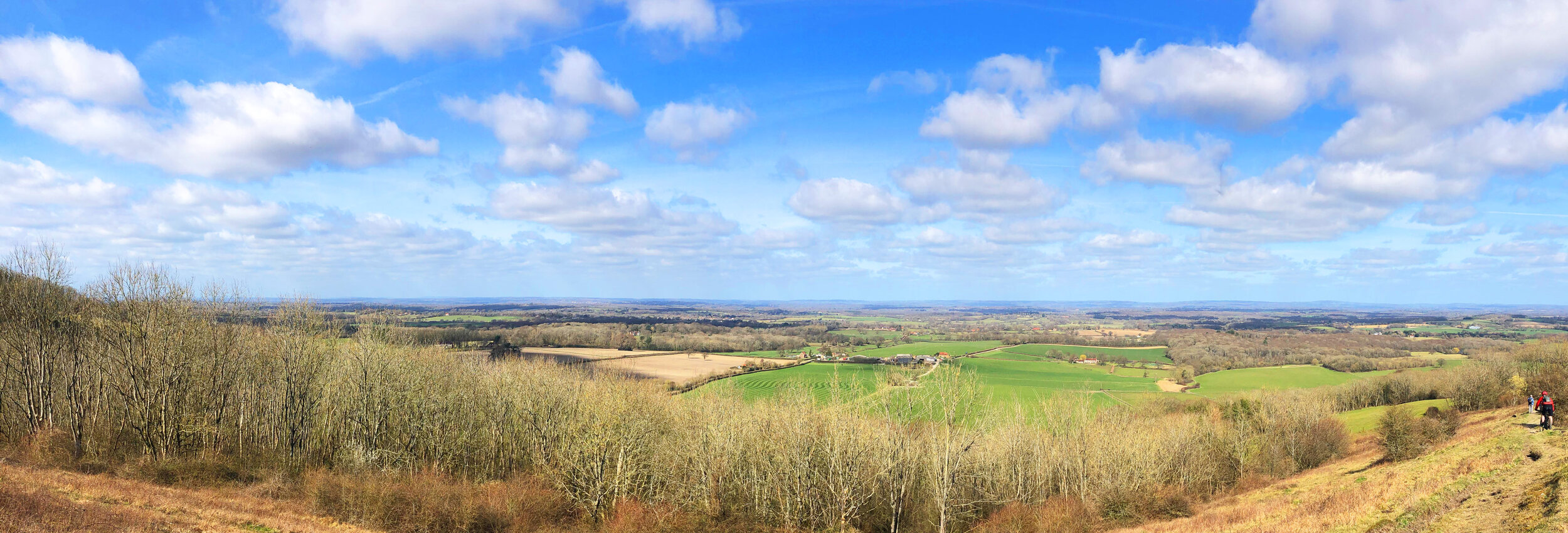
This is a deeply rural area - green fields, woodland and ancient hedgerows. Most local roads are single track with few passing places. There are no road networks or population centres nearby.
In 2016, Lewes District Council said the site was ‘not suitable, not deliverable or developable.’
Flooding
Flooding is a real concern. The Bevern Stream regularly floods - blocking the lanes and flowing across nearby fields. A new town would increase flooding risk.
The Bevern is a tributary of the River Ouse, which caused huge destruction when it flooded in 2000. A low-lying area prone to flooding is clearly unsuitable for a new town. “Building 3,250 houses at this location is geologically stupid and irresponsible…” - Professor Julian Murton, University of Sussex.
Blighting the South Downs National Park
A 2018 assessment for Lewes Council concluded that large-scale development would have: ‘Significant adverse impact upon the landscape character of this area, much of which forms a setting for the South Downs National Park’.
The Park is visted by 16 million people`a year and a 2011 SDNP report deemed ‘Breathtaking views and diverse, inspirational landscapes’ were one of seven Special Qualities which SDNP residents, communities and visitors prize.
The SDNP has been an International Dark Sky Reserve since 2026, one of only 25 in the world. Light pollution could threaten that status. Ditchling Beacon is also specifically listed as a specific 'Dark Skies Discovery Zone'
The area is also a UNESCO biosphere, one of only seven in the UK.
Traffic & Roads
The scheme would create traffic mayhem. Roads in the area are already overloaded, and essential junctions gridlocked at peak times.
The development would lead to around 4,000 additional cars & up to 3.5m extra car journeys a year. It would take some 30 years to build, blighting the area for decades with roadworks and heavy lorry movements.
Transport planners GTA Civils’s 2024 study said: “There is a fundamental lack of sustainable transport in the area… Safe and suitable access will be difficult to achieve and … the impact to the local highway network would be significant and would require very extensive mitigation (which even then may still not be sufficient)”.
Pollution
Raw sewage spills into the Bevern Stream are already a huge concern and increased pollution could devastate the rare sea trout population which spawns in the stream. Sam St Pierre, chair of the Ouse & Adur Rivers Trust said: “If the Bevern got further polluted, the trout here could go extinct. And we’re not talking about acute pollution – we’re talking about the kind of general low-grade pollution that you would get as run-off from urban development.” The Bevern is also home other rare fish and substantial mayfly and caddis fly populations which are also very sensitive to pollution.
Once gone, gone forever - the Environment
A rare and beautiful area of unspoilt East Sussex countryside is at risk. The site contains irreplaceable & protected wildlife habitats including ancient hedgerows, woodlands and veteran oak trees. It provides essential nature corridors for rare and endangered animals and birds, plus over 530 species of flowering plants, fungi, lichens, liverworts, mosses and ferns.
Official records show 28 species of mammals including eight species of bats, some of them very rare; 121 bird species including endangered birds like skylarks, nightingales and corncrakes; huge numbers of butterflies, bees and other insects; plus numerous reptiles and amphibians all live on the site of the new town.
All this contributes towards genetic diversity, soil, water and air quality, carbon storage … and brings other benefits to us all. The carbon footprint of a 3,000-home new town in an isolated area, plus all its new infrastructure would be significant.

Water Useage
With 3,000 homes, water useage wold increase to around 320m litres a year. Water companies are already over-extracting from our fragile underground chalk aquifers and reservoir levels are often very low. Even current demand is causing huge pressure.
Housing Need
More housing is certainly needed but in the right place.
The recent Homes for Everyone report from the Community Planning Alliance has detailed numerous alternatives to greenfield sites including renovating 1.5 millon+ derelict homes, ensuring that 1m+ unbuilt homes that already have planning permission get built and incentivising developers to build on brownfield and urban sites.
Eton College is a charitable trust and, at a time of environmental crisis in the most nature-depleted country in Europe, Eton should be setting an example to its pupils and to our wider generation of young people by doing its bit for the planet - not obliterating nature for profit.
Wrong Scheme Wrong Place
This scheme just doesn’t make sense. A new town on a greenfield site is not supported by local housing needs or existing infrastructure. It’s contrary to all planning logic. Previous planning assessments recommended zero building growth for East Chiltington, the location of the proposed New Town, and found the proposed building site ‘not suitable’, ‘not deliverable or developable’.

To find out more…
To find out more ……..
For a more detailed, technical description of the arguments against the proposed new town by East Chiltington Parish Council see http://www.eastchiltington.net/news-and-events/ecpc-response-to-draft-methodology-statement/?MessagePageUrl=http://www.eastchiltington.net/news
http://www.eastchiltington.net/community-information/about-the-parish/
According to RAC figures and Government National Traffic Survey data 2018, 3,000 houses equates to 6,000 extra people and 4,200 additional cars. (If the proposal is for family homes, it is likely that the actual number of extra people introduced into the area will be significantly greater.) Each person makes on average 602 car trips per year which would equate to 3,612,000 additional car trips each year if this development was to go ahead. (From East Chiltington Parish Council response to the proposed site March 12th 2021 as in 1)